
What Makes a Pilates Reformer Suitable for Daily Commercial Use?
Commercial performance is defined by the complete operating system—not appearance alone.
A Reformer used in a commercial studio must support repeated adjustment, frequent cleaning and consistent movement across many sessions. Its suitability comes from the relationship between structure, moving components, adjustment design, contact surfaces and maintenance access.
Stable Structure
The frame, joints, rails, feet and connection points should remain stable during common transitions and instructor-assisted movement.
Consistent Carriage Movement
Wheels, bearings and rail alignment should provide smooth travel without abnormal resistance, noise or lateral instability.
Practical Adjustment
Footbars, headrests, ropes and straps should be clear and repeatable so instructors can maintain class flow.
Durable Contact Surfaces
Padding, upholstery and seams should support comfort, regular cleaning and repeated studio use.
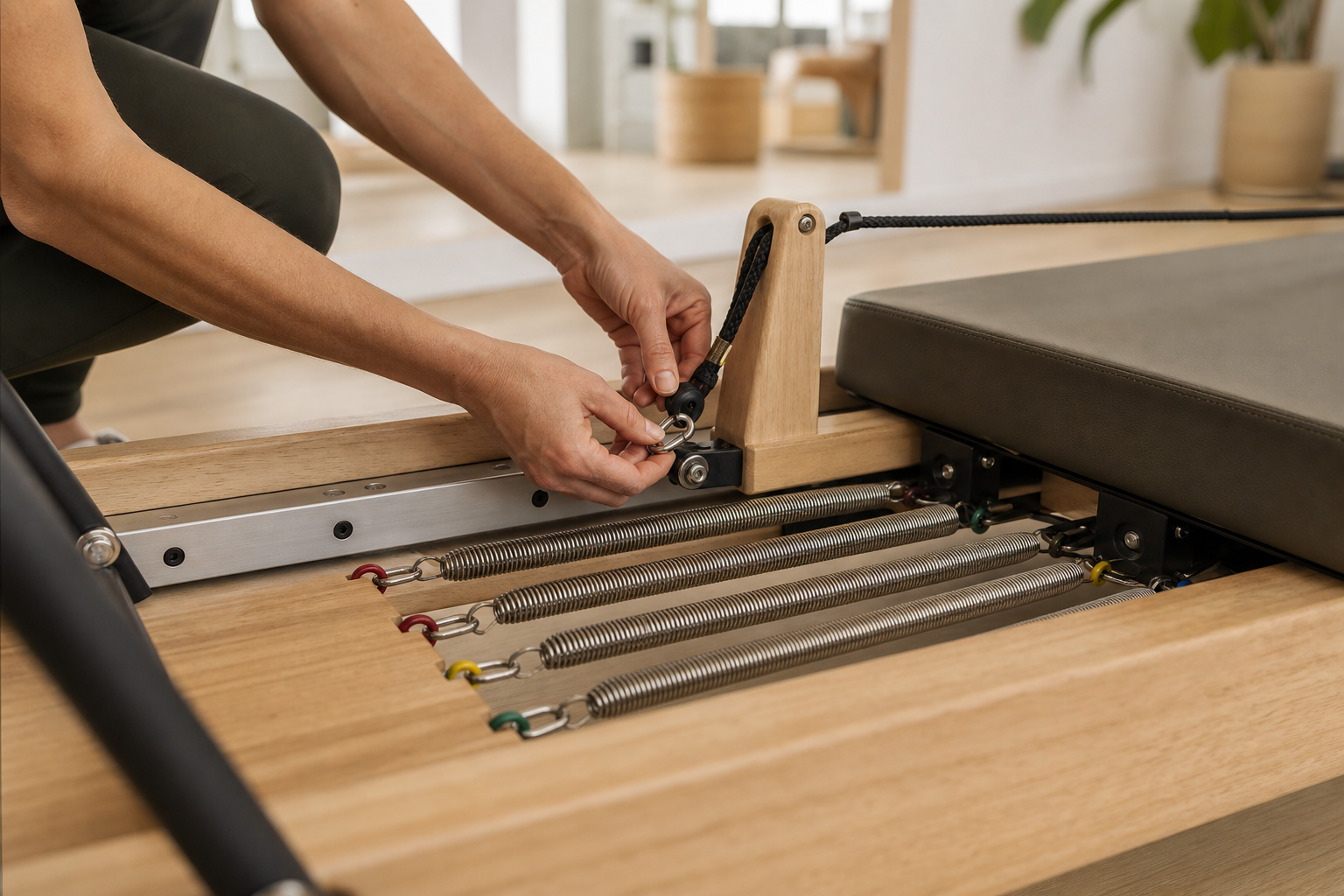
Replaceable Wear Components
Springs, ropes, straps, wheels and upholstery are service items over the equipment’s working life. Clear identification and access to compatible replacement parts support long-term operation.
Inspection and Maintenance Access
Studio staff should be able to see and inspect important components without complicated disassembly. A practical maintenance plan is part of commercial equipment ownership.
Share your studio model, class size and preferred frame material.